20% OFF shipping at visitminturnoscauri.it on orders over $79 + up to 10% OFF products
visitminturnoscauri.it
home > Tsukigase Withered Sencha / 月ヶ瀬萎凋煎茶 > Tsukigase Withered Sencha / 月ヶ瀬萎凋煎茶
download picture
Tsukigase Withered Sencha / 月ヶ瀬萎凋煎茶This unique sencha is crafted from Tsukigase's spring tea and undergoes an extended withering process to enhance its flavor profile. The result is a delicate floral aroma reminiscent of Taiwans high mountain oolongsthose lightly fermented teas known for their refreshing, spring like floral notes. It carries a subtle hint of sweet nuttiness and offers a smooth, lasting experience across multiple brews. What is the Withering Process? The withering
Shopping security

Shopping security

Each payment you make on thelockerguy is secured with strict SSL encryption and PCI DSS data protection protocols

This unique sencha is crafted from Tsukigase's spring tea and undergoes an extended withering process to enhance its flavor profile. The result is a delicate floral aroma reminiscent of Taiwan’s high mountain oolongs—those lightly fermented teas known for their refreshing, spring-like floral notes. It carries a subtle hint of sweet nuttiness and offers a smooth, lasting experience across multiple brews.


What is the Withering Process?

The withering process aims to remove moisture from fresh tea leaves. This dehydration triggers enzymes that promote moderate oxidation of polyphenols. There are two primary methods for withering tea:

  1. Mechanical Ventilation: This method involves using a withering bath to blow air over the leaves, commonly employed in black tea production.

  2. Natural Withering: In this method, tea leaves are spread out on trays in a well-ventilated area. If a withering bath is used, it can lead to intense fermentation, resulting in a strong fruity flavor and yellow or orange edges on the leaves.

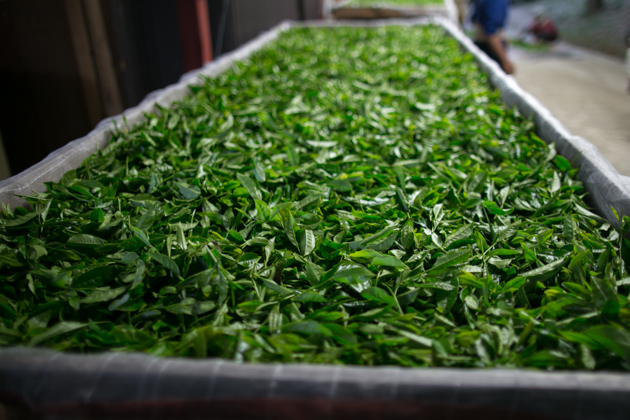
For my green tea, which aims to capture both floral and sencha characteristics, I opted for the natural method. I spread the fresh tea leaves in a very thin layer on a tray and placed it in a forested area for a day to allow for gentle withering.


Not Making Oolong, but Sencha with Floral Flavor

While we do employ a withering process, I wasn't interested in producing oolong tea. There are already many high-quality oolong teas available in Taiwan and China that are both affordable and reasonably priced, so I see no reason to make oolong tea in Japan. Instead, I am eager to utilize light fermentation techniques to enhance the flavor profile of sencha.

Exclusively Selected Gardens for HOJO

We source fresh tea from a specific garden that adheres to natural farming practices, avoiding both pesticides and nitrogen fertilizers. In Japan, this is known as the natural agriculture style. We have a long-standing relationship with this tea producer, who reserves the same tea garden exclusively for us each year. The Tsukigase garden is quite small and dispersed, meaning that when the producer sells to other customers, they often blend tea leaves from multiple gardens. Our tea, coming from a single garden, showcases very distinctive characteristics.

Soil from the Ancient Lake Biwa

Six million years ago, the entire Tsukigase region, along with other Uji tea-growing areas, was once the bottom of Lake Biwa. This land is rich in iron and alkaline minerals, but these minerals are primarily found in the upper mountain regions. In contrast, the soil at lower elevations contains more sand due to river erosion. This geological history is why our tea gardens are located near the mountain tops, where the soil quality is optimal for tea cultivation.
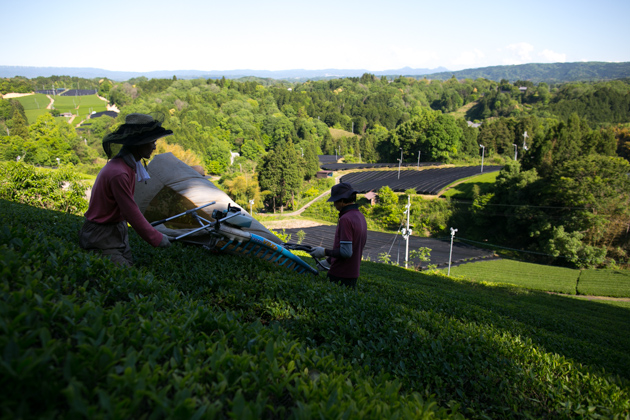
Tsukigase's tea garden. You may notice that the hills behind it form a straight line. This used to be the bottom of Lake Biwa, millions of years ago.

Difference Between Bred Cultivar and Seeded Tea

We selected Tsukigase tea from a tea tree variety known as Zairai, which in Japanese refers to pure Japanese varieties. However, it’s important to note that tea originally comes from China, making the term "Zairai" somewhat misleading in the context of tea. In Japan, "Zairai" indicates that the tea is grown from seeds. In contrast, cultivated varieties like Yabukita are propagated through cuttings.

Tea plants grown from seeds develop a single deep root that penetrates the ground, allowing them to effectively absorb minerals. On the other hand, tea plants propagated from cuttings produce multiple shallow roots that are well-suited for absorbing fertilizers, as they remain in the upper soil layers.

Because I value a rich aftertaste and long-lasting flavor, I specifically choose seeded tea, or what is commonly referred to as Zairai tea.
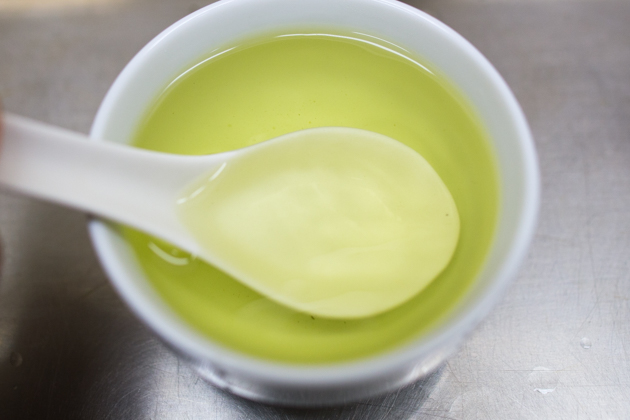
The liquor of Tsukigase Withered Sencha is bright yellowish green and transparent.
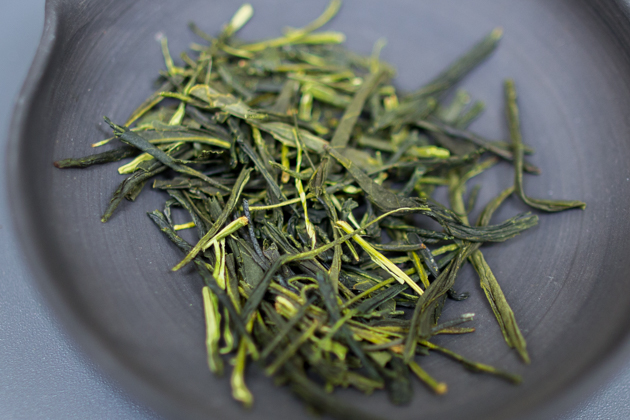
Floral Flavor That Lingers After Drinking

Tsukigase Withered Sencha features refreshing floral notes reminiscent of orchids. Its taste includes subtle hints of Taiwan's Wen Shan Bao Zhong Oolong, while still allowing you to appreciate the classic sencha flavor. Personally, I love the way the floral fragrance returns to the palate after each sip, creating a delightful experience.


In Japan, tea manufacturers typically remove stems from tea leaves, believing that their presence makes the leaves look unattractive. However, the stems are actually quite important for flavor, as they contain calcium, which is less abundant in the leaves. Calcium contributes significantly to the overall body of the tea. In fact, other types of tea—such as oolong, black, white, and Pu-erh—also include stems. Therefore, we intentionally retain the tea stems in our product.

Ideal Brewing Method

Japanese tea is often brewed at lower temperatures (around 70-80°C) to minimize bitterness, which primarily comes from caffeine that is rarely extracted below 80°C.

However, for this particular sencha, we recommend using boiling water, as the tea itself is naturally less bitter. Additionally, the long withering process enriches its polyphenol content, resulting in a bolder flavor.

To brew, heat the teapot with boiling water for about 10 seconds, then steep the tea with boiling water. The ideal brewing time is around 30 seconds. If you're using a larger teapot or prefer a stronger brew, you can steep for longer or use more tea leaves. For the second infusion, a steeping time of just a few seconds is sufficient.


Tsukigase Withered Sencha / 月ヶ瀬萎凋煎茶

Item no : 21948771272
sold recently : Login >>
US$ 158.00
Pay in 4 interest-free payments of $39.50 Learn more
Min. order: 1piece

Shipping Estimate
USA
  • USA
  • CAN

Ships within 48 hours · Estimated delivery Jun 25 - Jun 30

Enjoy 20% off shipping

US$ 158.00

1-11

US$ 142.20

12-35

US$ 110.60

36-59

US$ 94.80

60+

US$40

Get now

Sign up to your membership to get coupons up to

15%

Get now

Opportunity to enjoy order discount up to 15% off

Please add the products
Shipping Notes
  • Free Standard Shipping on $100+ Orders to the USA.
  • Except Preorder products are shipped in 48 hours.
  • Delivery to the USA:
  1. Standard Shipping : 3-10 business days
  • If time is of the essence, please consider selecting expedited delivery for faster service.
Exchange/Return Notes
  • We offer a 30-day return/exchange service after receiving.
  • Final sale items are not eligible for returns or exchanges.
  • To process your return/exchange, please contact us at [email protected]
  • Please click here for more details>>> Return & Exchange Policy

Discover Niche Categories That Outsell

Top-Converting Item to Boost Your Average Order

recommand products

Related Searches